
Yes, a Smart Car can be flat towed, but it depends on the specific model and its transmission type. Many Smart Fortwo models, especially those with certain automatic transmissions or manual gearboxes, are good for flat towing. This is also called dinghy towing or four-down towing. Always check your car’s owner’s manual first. It has the most important details for safe towing.
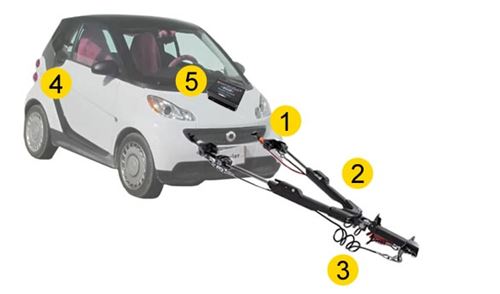
Image Source: www.etrailer.com
Grasping Flat Towing: The Basics
Flat towing is a way to pull a vehicle behind another, like an RV. All four of the towed car’s wheels stay on the ground. It is also known as four-down towing or dinghy towing. People often do this with a smaller car. They use it as a “toad” or “dinghy” when they reach their camp spot.
Why flat tow a Smart Car?
Smart Cars are small. They are light. This makes them good for flat towing. They are easy to drive around towns. They are great for quick trips from your RV campsite. They save fuel. They also take up less space than a trailer or a car dolly.
Smart Car Flat Towing Compatibility: Which Models Work?
Not all Smart Cars can be flat towed. The main thing that matters is the car’s transmission type. The model year also plays a big part. It is vital to know this. Towing a car that is not made for flat towing can cause major damage. This damage can be expensive. It can also be dangerous.
Smart Fortwo Models
The Smart Fortwo is the most common Smart Car. Its flat tow compatibility changes a lot by year and gearbox.
-
Smart Fortwo (450 Generation: 2002-2007)
- These models have an automated manual transmission (AMT).
- Many owners successfully flat tow these.
- They need to be in neutral.
- The key must be in the accessory position to unlock the steering.
- Always check your car’s specific manual.
- Some manuals for these years say flat towing is okay. Others do not. This can be confusing.
- It is best to check with a Smart Car expert or dealer if you own this model.
-
Smart Fortwo (451 Generation: 2008-2015)
- This is a popular model for flat towing.
- Most 451 models with the automated manual transmission (AMT) can be flat towed.
- The manual gearbox is also fine for flat towing.
- Flat tow Smart car automatic transmission (AMT) models are usually okay.
- The car needs to be in neutral.
- The steering wheel must be unlocked.
- Many Smart car RV towing setups use this model.
- The Smart car owner’s manual towing details for these years are usually clear. They say it is safe.
-
Smart Fortwo (453 Generation: 2016-2019)
- This generation is different.
- It came with two types of gearboxes:
- Manual Transmission: Smart Fortwo with a manual gearbox can be flat towed. This is often the safest bet for four-down towing.
- Dual-Clutch Transmission (DCT): This is a true automatic. It is NOT safe for flat towing. These transmissions need the engine running to lubricate parts. Flat towing them will cause serious damage. This damage can ruin the gearbox.
- It is vital to know which gearbox your 453 model has.
- If you have a 453 automatic, do not flat tow it.
Smart Forfour Flat Towing
The Smart Forfour has different towing rules.
-
Smart Forfour (First Generation: 2004-2006)
- These cars often have a standard manual gearbox.
- They can be flat towed if they have the manual gearbox.
- The key must be in the accessory position. This keeps the steering unlocked.
- Check the owner’s manual for specific instructions.
-
Smart Forfour (Second Generation: 2016-2019)
- Like the 453 Fortwo, this model shares parts with the Renault Twingo.
- It also came with manual or dual-clutch automatic gearboxes.
- Manual Transmission: Smart Forfour models with a manual gearbox can be flat towed.
- Dual-Clutch Transmission (DCT): Like the 453 Fortwo, this automatic gearbox is NOT safe for flat towing. It will lead to damage.
Key Rule: If your Smart Car has a true automatic or dual-clutch transmission (DCT), it likely cannot be flat towed safely. If it has a manual gearbox or an older automated manual (AMT), it likely can. Always check your specific Smart car owner’s manual towing section. This is the only way to be sure.
Why Certain Smart Cars Are Flat Tow Friendly
The main reason some cars can be flat towed and others cannot is how their transmission works. This is about Smart car transmission flat tow safety.
When a car is flat towed, its wheels spin. This makes parts inside the gearbox move. These parts need oil to stay cool and not wear out.
-
Manual Gearboxes: In a manual gearbox, the gears are always in the oil. As the wheels spin, the parts move in this oil. This keeps them lubricated. So, manual cars are usually safe to flat tow. You just put them in neutral.
-
Automated Manual Transmissions (AMT): These are like manual gearboxes but with robot parts that shift gears. Many older Smart Fortwo (450 and 451) models have this. When put in neutral, the internal parts still get enough oil. So, these are often safe for flat towing.
-
Dual-Clutch Transmissions (DCT) and True Automatics: These are different. They need the engine to be running. The engine powers a pump. This pump sends oil to all the parts in the gearbox. If the engine is off (which it is when flat towing), the pump does not work. The parts do not get oil. They will get hot. They will grind down. This leads to costly damage. This is why flat tow Smart car automatic transmission models (DCT type) are a no-go.
Knowing this difference is key. It helps you keep your Smart Car safe. It prevents expensive repairs. Always check your car’s manual. It will tell you if your car needs engine power for gearbox lubrication.
Preparing Your Smart Car for Flat Towing
Once you know your Smart Car can be flat towed, you need to set it up right. Proper setup is very important. It keeps your car safe. It keeps you safe.
Essential Checks Before You Tow
Before you even hook up your Smart Car, do these checks:
- Tires: Check tire pressure. Make sure it matches the car’s suggested level. Look for any cuts or wear.
- Lights: Make sure all lights work. This includes headlights, taillights, brake lights, and turn signals. You will need to wire your Smart Car so its lights work with your RV’s lights.
- Brakes: Check your Smart Car’s brakes. They need to be in good shape.
- Fluid Levels: Check engine oil, coolant, and brake fluid. These fluids help keep your car running well, even when not in use.
- Overall Condition: Look for any loose parts. Check hoses and belts. Fix any issues before you tow.
Steps for How to Flat Tow a Smart Car
This is a step-by-step guide. It covers the basics for a Smart car four-down towing guide. Always follow your specific owner’s manual.
- Park the Smart Car: Park it behind your RV. Make sure it is straight.
- Connect the Tow Bar: Attach the tow bar to the base plate on your Smart Car. Make sure it locks into place. Double-check all connections.
- Connect Safety Chains: Attach safety chains. Cross them under the tow bar. This way, if the tow bar fails, the chains will catch the car. They must be strong.
- Connect Wiring for Lights: Plug in the wiring harness. This connects your Smart Car’s lights to your RV’s electrical system. Test all lights (turn signals, brake lights, running lights) to make sure they work.
- Set the Smart Car’s Transmission:
- Put the gearbox in NEUTRAL (N). This is a must.
- For cars with an automated manual (AMT), ensure it’s in neutral.
- For manual gearboxes, put it in neutral.
- Unlock the Steering Wheel:
- For most Smart Cars, turn the key to the “Accessory” (ACC) position. This unlocks the steering wheel. This is vital. If the steering is locked, your Smart Car will not turn with the RV. It will drag the tires. This can cause severe damage.
- Remove the key from the ignition if your manual says to. This is common for some cars. But make sure the steering stays unlocked. Some Smart cars might need the key left in and in the accessory position.
- Release the Parking Brake: Make sure the parking brake is fully off.
- Add Auxiliary Braking System:
- Install your auxiliary braking system.
- These systems help the Smart Car’s brakes work with the RV’s brakes. This is often required by law. It makes towing much safer.
- Make sure the brake system is set up and working right.
- Do a Final Walk-Around: Check all connections one last time. Look at the tow bar, safety chains, wiring, and the Smart Car’s position. Make sure nothing is loose.
- Test Drive Slowly: Drive slowly at first. Make some turns. Watch your mirrors. Make sure the Smart Car follows correctly. Listen for any strange noises.
Following these steps helps ensure your Smart car RV towing setup is safe and ready.
Key Equipment for Smart Car RV Towing
To flat tow your Smart Car safely, you need special gear. Getting the right parts is as important as setting up your car.
Tow Bar Systems
The tow bar is the main link between your RV and your Smart Car.
-
Types of Tow Bars:
- Fixed Tow Bars: These are simple and strong. They are usually cheaper. But they do not fold up.
- Folding (or A-Frame) Tow Bars: These fold up when not in use. They are easier to store on the RV. They cost more.
- Self-Aligning Tow Bars: These make hooking up easier. They allow you to be a little off-center when connecting.
-
Capacity: Make sure your tow bar can handle the weight of your Smart Car. Smart Cars are light. But you still need the right capacity.
- Smart Car Tow Bar Installation: Tow bars connect to a base plate. The base plate is specific to your Smart Car model. It bolts to the car’s frame. This setup is key for safe towing. It should be installed by someone who knows how to do it. Or follow the instructions carefully.
Base Plates
A base plate is a custom bracket. It bolts to the front frame of your Smart Car. It provides strong attachment points for the tow bar.
- Model-Specific: You need a base plate made for your exact Smart Car model and year. A Smart Fortwo base plate will not fit a Smart Forfour.
- Importance: The base plate distributes the towing forces across the car’s frame. This prevents damage to the car’s front end.
Auxiliary Braking Systems
These systems help your Smart Car brake when your RV brakes. This is one of the most important pieces of safety gear.
- Legal Requirement: Many states and countries require auxiliary brakes for towed vehicles over a certain weight. A Smart Car often falls into this category. Check your local laws.
- Why they are Critical:
- They help your RV stop faster.
- They reduce wear on your RV’s brakes.
- They prevent the towed car from pushing the RV in an emergency stop. This is a big safety risk.
- Types of Systems:
- Proportional Braking Systems: These are the best. They apply the Smart Car’s brakes with the same force as the RV’s brakes. If the RV brakes lightly, the Smart Car brakes lightly. If the RV brakes hard, the Smart Car brakes hard.
- Ready Brake Systems: These use a surge motion. When the RV slows down, the Smart Car pushes forward. This activates its brakes.
- Portable Braking Systems: These sit on the floor of the towed car. They press the brake pedal. They are easy to move between vehicles. But they might need more setup time.
- Hard-Wired Systems: These are built into the towed car. They are usually more expensive to install. But they are very reliable.
Safety Chains and Cables
These are a backup. They connect your RV to your Smart Car. If the tow bar breaks, the chains keep the car attached.
- Crossed: Always cross the chains under the tow bar. This forms a cradle. If the tow bar fails, the crossed chains will hold the car. They also prevent the tow bar from hitting the ground.
- Strong: Use chains that are strong enough for the weight of your Smart Car.
Wiring for Lights
Your Smart Car’s lights must work with your RV’s lights. This means its taillights, brake lights, and turn signals need to light up when the RV’s do.
- Wiring Harness: You will need a wiring harness. This connects the RV’s electrical system to the Smart Car’s lights.
- Types: Some systems are simple plug-and-play. Others require more complex wiring into the Smart Car’s light system.
Getting the right equipment is a big part of “Smart car four-down towing guide” success. Do not cut corners here. Safety comes first.
Deciphering Your Smart Car Owner’s Manual for Towing
Your Smart Car owner’s manual is your most important tool for flat towing. It is a main source for Smart car owner’s manual towing details. Do not skip reading it.
Why the Manual is Key:
* Direct Information: The manual tells you exactly what your car can or cannot do. It is from the maker of the car.
* Specific Rules: It lists specific steps for preparing your car for towing. It might say:
* Which gear to put the car in (always neutral).
* If the key needs to be in the ignition and in what position (e.g., accessory).
* If any fuses need to be pulled.
* Speed limits for towing.
* Distance limits for towing.
* Warranty: Not following the manual’s rules can void your car’s warranty. If your gearbox breaks because you towed it wrong, the car maker will not pay for the fix.
* Safety: The manual gives vital safety advice. It helps prevent damage to your car or accidents.
Where to Look in the Manual:
Look for sections titled:
* “Towing”
* “Recreational Vehicle Towing”
* “Dinghy Towing”
* “Emergency Towing” (sometimes, but this is usually for short distances and different methods)
If you cannot find specific flat towing instructions, or if it says “do not flat tow,” then your car is likely not meant for it. If it is unclear, contact a Smart Car dealer or the manufacturer. Give them your exact model and year.
Remember, even if your friend has the same model, their year might be different. That difference could mean their car can be flat towed, but yours cannot. This is especially true for Smart Fortwo flat tow compatibility across different years.
Prioritizing Safety and Legal Compliance
Towing involves big vehicles and lots of weight. Safety is paramount. You also need to follow the law.
Weight Limits
- RV Towing Capacity: Your RV has a maximum weight it can tow. Do not go over this limit.
- Tow Bar Capacity: Your tow bar has a weight limit. Make sure it is more than your Smart Car’s weight.
- Smart Car Weight: Know the exact weight of your Smart Car. You can find this in your manual or on a door sticker.
- Gross Combined Weight Rating (GCWR): This is the total weight of your RV, its contents, and the towed Smart Car. Never go over your RV’s GCWR.
State and Province Towing Laws
Towing laws differ greatly.
- Auxiliary Brakes: Most places require auxiliary brakes for towed vehicles over a certain weight. This weight varies by state. Always check.
- Lighting: Your towed Smart Car must have working taillights, brake lights, and turn signals.
- Safety Chains: Chains are almost always required.
- Speed Limits: Some areas have lower speed limits for vehicles towing.
- Length Limits: There are limits on the total length of your RV and towed car combined.
Before you travel, research the towing laws for all states or provinces you will pass through. You can often find this information online. Police can fine you or stop your trip if you do not follow these laws.
Pre-Trip Checks
Before every trip, big or small:
* Check all connections: tow bar, base plate, safety chains.
* Test all lights (RV and Smart Car).
* Check tire pressure on both vehicles.
* Make sure auxiliary brakes are working.
* Confirm your Smart Car is in neutral, steering unlocked, and parking brake off.
During-Trip Monitoring
- Mirrors: Use your RV mirrors often. Watch your Smart Car. Make sure it is tracking straight. Look for any swaying or problems.
- Sounds: Listen for unusual noises.
- Dashboard Warnings: If your RV has a warning for the towed car (e.g., brake issue), stop and check it.
- Stop and Check: Pull over safely every few hours. Look at all connections. Check tires for heat. This is very important for Smart car transmission flat tow safety. Feel the hubs and wheels for heat. If they are hot, something is wrong.
Post-Trip Checks
When you arrive at your destination, or after a long drive:
* Inspect the tow bar and base plate for damage.
* Check your Smart Car’s tires and wheels for wear.
* Make sure nothing looks loose or damaged.
Taking these steps helps ensure a safe trip for you and your Smart Car.
Advice for Trouble-Free Smart Car Towing
Flat towing can be easy if you follow the rules. Here are some tips for a smooth Smart car RV towing experience.
- Practice Turning: Before a long trip, practice driving and turning with your Smart Car hooked up. Understand how it follows. Learn how much room you need for turns.
- Wider Turns: When towing, always make wider turns than normal. The Smart Car will cut the corner inside your RV’s path. If you turn too sharp, you can hit the curb or other objects with the Smart Car.
- Watch Your Mirrors: This cannot be stressed enough. Check your mirrors constantly. It helps you see if the Smart Car is still there, if it is tracking correctly, or if there is any issue.
- Avoid Sudden Stops: Try to brake smoothly and early. Hard stops put a lot of stress on your tow system and the Smart Car.
- Regular Checks: During stops, walk around your entire setup. Check all connections, tires, and lights. Feel the hubs on your Smart Car’s wheels. If they are hot, something is wrong with the wheel bearings or brakes.
- Use the Right Gear: Ensure your RV is in the correct gear for towing. Do not overwork your RV’s engine or transmission.
- Do Not Back Up: You cannot back up with a vehicle flat towed behind you. The towed car’s steering will cause it to jackknife. If you need to back up, unhook your Smart Car first.
- Keep Records: Keep a log of your towing mileage. This helps you track wear on your Smart Car’s tires and other parts. It helps with maintenance.
- Maintain Your Smart Car: Even though it is not running, its tires, suspension, and steering parts are working. Keep up with your Smart Car’s regular service.
By following these tips, your experience with how to flat tow a Smart car will be much smoother and safer.
Weighing the Benefits and Drawbacks
Deciding to flat tow a Smart Car comes with good points and bad points. It is smart to know both.
Advantages
- Convenience: Flat towing is simpler than using a trailer or a car dolly. You do not need to load the car onto a platform. You just hook up and go.
- Portability: A Smart Car is small and easy to drive once unhooked. It is perfect for tight city streets or short trips from your campsite.
- Fuel Efficiency: Smart Cars are light. They do not add as much weight as a larger car. This helps your RV’s fuel economy.
- Storage: You do not need extra space for a trailer. The tow bar folds up or comes off.
- Cost: Flat towing equipment (tow bar, base plate, auxiliary brakes) can be cheaper than buying a car trailer.
Disadvantages
- Transmission Risk: The biggest risk. If your Smart Car is not designed for flat towing, its transmission will get damaged. This is a very expensive repair. This is why Smart car dinghy towing rules are so strict.
- Wear and Tear: Even suitable Smart Cars will experience wear on tires, wheel bearings, and suspension components. These parts are constantly moving.
- Mileage Accumulation: Some people worry about “phantom” miles. Flat towing does not add miles to the odometer for most Smart Cars. But the tires and drivetrain parts still experience wear.
- No Backing Up: This is a big one. You cannot back up your RV with a flat-towed car. If you need to reverse, you must unhook the Smart Car.
- Dependency on Auxiliary Systems: You need to buy and install extra braking systems and wiring. These add to the overall cost and setup complexity.
Knowing these pros and cons helps you make the right choice for your travel needs. For many RV owners, the benefits of Smart car four-down towing outweigh the drawbacks, especially for compatible models.
Concluding Thoughts on Smart Car Flat Towing
Can a Smart Car be flat towed? Yes, many can. But it is not a simple yes or no for every model. The most important things to remember are the Smart Car’s model year and its transmission type.
Always check your Smart car owner’s manual towing section. This is your best guide. If your car has a manual gearbox or an older automated manual transmission (like many 451 Fortwos), it is likely a good candidate. If it has a modern dual-clutch automatic (found in 2016+ models), it is generally not suitable for flat towing. Ignoring this can lead to very costly transmission damage.
Making sure you have the right equipment is also vital. This includes a strong tow bar, a model-specific base plate, and a proper auxiliary braking system. These tools ensure both safety and legal compliance.
With careful planning, the right equipment, and knowledge of your Smart Car’s limits, flat towing can be an excellent way to bring a small, handy car along on your RV adventures. It offers great convenience and flexibility at your destination. So, do your homework, set up correctly, and enjoy the open road with your Smart Car in tow!
Frequently Asked Questions (FAQ)
Q1: Can I flat tow any Smart car?
No. You cannot flat tow any Smart car. Compatibility depends on the model year and the type of transmission. Smart cars with manual transmissions or certain automated manual transmissions (like the older 451 Fortwo) are usually fine. Those with modern dual-clutch automatic transmissions (common in 2016+ models) are generally not safe to flat tow.
Q2: Do I need a special transmission for flat towing?
You need a transmission that can be lubricated without the engine running. Manual transmissions are best for this. Some automated manual transmissions (AMTs) also work. True automatic transmissions, like dual-clutch transmissions (DCTs), need the engine running for lubrication. These are not good for flat towing.
Q3: Is it hard to install a tow bar on a Smart car?
Installing a tow bar itself is simple. But installing the base plate on your Smart Car is more complex. The base plate needs to be specific to your Smart Car model. It bolts onto the frame. This job is best done by a professional. Or, you need to be very handy and follow detailed instructions.
Q4: What is a “dinghy”?
In RV and towing terms, a “dinghy” (or “toad,” short for “towed”) is a small car or vehicle that is towed behind a motorhome. It is used for short trips when you reach your travel destination.
Q5: How often should I check my Smart car while flat towing?
You should check your Smart car at every fuel stop, or at least every few hours. Look at all connections: tow bar, base plate, safety chains, and electrical wiring. Check the tires for proper pressure and signs of heat. Feel the wheel hubs for unusual heat. Also, watch your RV’s mirrors constantly to make sure the Smart Car is following correctly.